

 Anti-Spike Supplement
 Protein Prodigy
 The Recipe Club
 Course
 The 10 Glucose Hacks
 Vinegar
 Alcohol
 Fasting
 GLP-1
GLP-1
 What to Eat Before & After Exercise
 Protein
 PCOS
PCOS
 Menopause
 My MRI Story
 Breakfast
 Supplements
 Clothes on Carbs
 Eggs & Cholesterol
 Chocolate
 Food Labels
 Veggie Starters
 Move After Eating
 Why Glucose Matters
 Glucose Revolution
 The Glucose Goddess Method
 9 Months That Count Forever

SCIENCE GUIDE
Are you curious about the buzz around apple cider vinegar (ACV) and its benefits for weight loss? This guide will break down everything you need to know about using ACV to support your health. Apple Cider Vinegar is one of the most popular vinegars. But, from a glucose standpoint, it works exactly the same as any other vinegar. Let's dive in!
DISCLAIMER: If you have any medical conditions or take any medication, speak to your doctor before using vinegar.
What is Vinegar?
Acetic acid

Let's start with what vinegar is. Vinegar is this amazing, tangy liquid that comes from fermenting alcohol with acetic acid bacteria. It's been around for centuries, not just spicing up our meals, but also providing fantastic health benefits. The magic ingredient in vinegar is acetic acid. This is what gives vinegar its distinctive sour taste and incredible health properties.
People have used vinegar for thousands of years. Ancient civilizations like the Babylonians used it as a preservative and condiment. Hippocrates used vinegar to clean wounds. During the Middle Ages, it served as a disinfectant, and explorers took it on voyages to prevent scurvy. Vinegar has also been a beauty secret for ages. In ancient Rome, women used vinegar as a skin toner and to brighten their complexion. It’s amazing how versatile and beneficial this simple liquid has been throughout history!
What Are the Benefits of Apple Cider Vinegar?
Helps Control Blood Sugar
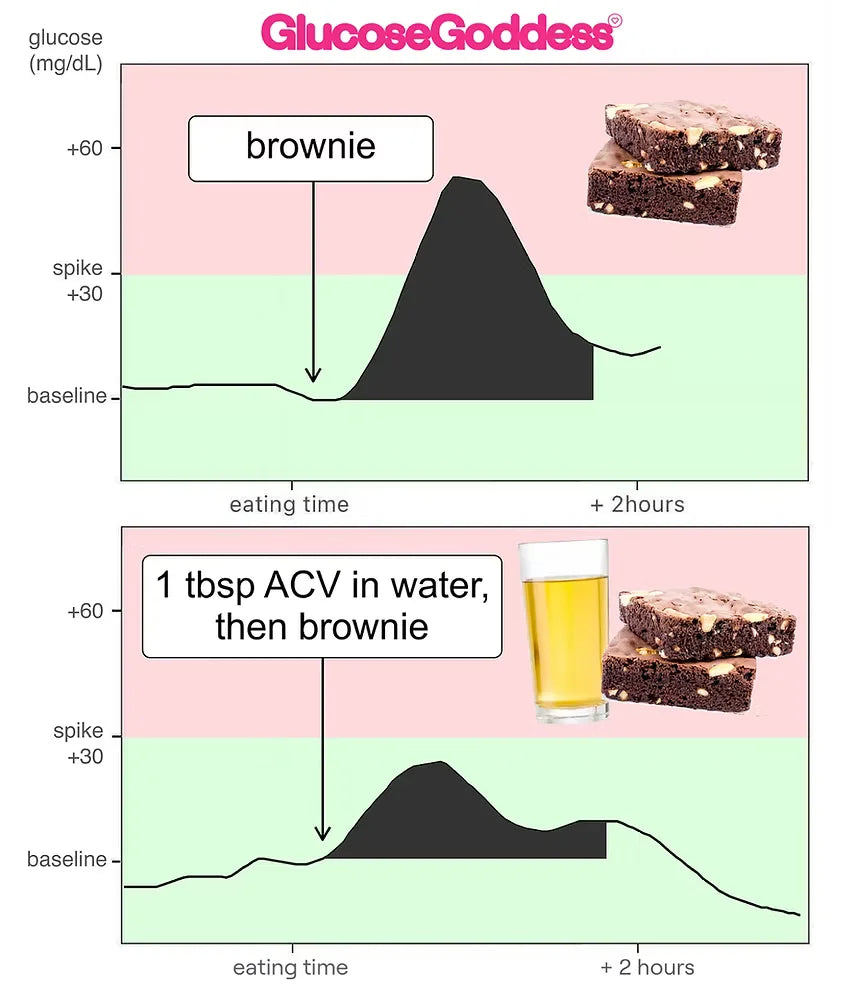
When you eat foods like cake or pasta, your blood sugar (glucose) levels can go up quickly. Your body then makes insulin to lower the glucose levels. Over time, this can make your cells stop responding to insulin properly, called insulin resistance. This makes it harder to burn fat for fuel and can lead to type 2 diabetes. ACV helps your body counteract this process.
Burns Fat Faster
ACV can help your body burn fat faster. The acetic acid in ACV tells your cells to burn more fat, , even when you're resting. This helps you lose weight over time.
Improves Digestion
ACV helps your digestion by making your stomach more acidic. This helps break down food better, so your body absorbs nutrients more easily and gets rid of waste efficiently.
Good digestion is important for weight loss because it ensures your body gets the nutrients it needs to work properly. When your digestion is good, you are less likely to feel bloated or constipated. ACV helps keep your digestive system running smoothly, supporting your weight loss efforts.
Makes You Feel Full
Drinking ACV can help you feel full longer. This reduces the chances of overeating and helps control your calorie intake. By feeling full, you're less likely to snack between meals.
A study found that people who drank ACV with a high-carb meal felt more satisfied and ate fewer calories throughout the day. This feeling of fullness can help you eat less without feeling unsatisfied.
Protects Your Cells
ACV contains antioxidants that protect your cells from damage. This helps improve your overall health and can prevent diseases caused by cell damage. Free radicals can damage cells, leading to inflammation and diseases. The antioxidants in ACV help neutralize free radicals and protect your cells.
Supports a Healthy Gut
ACV helps good bacteria grow in your gut. A healthy gut improves digestion, boosts your immune system, and helps manage weight better.
The gut microbiome, which consists of trillions of bacteria in your intestines, plays a crucial role in your overall health. A balanced gut microbiome improves digestion, and nutrient absorption, and supports a healthy immune system. ACV contains probiotics, which are good bacteria that help maintain a healthy gut.
Lowers Glucose and Insulin Spikes

Taking one tablespoon of ACV before meals can lower the glucose and insulin spikes that happen when you eat carbs. This helps manage your blood sugar levels and reduces fat storage.
When you eat carbs, your blood sugar levels can rise quickly, causing your body to release insulin. High insulin levels can lead to fat storage and weight gain. ACV can help lower the insulin spike after meals, reducing the risk of fat storage and helping you keep your blood sugar levels steady. This is a very important point: the more insulin there is in our body, the more our liver, muscles, and fat cells work to remove any excess glucose from the bloodstream and quickly store it away. However, although insulin brings glucose levels down, it also increases inflammation and weight gain. What we really want to do is flatten our glucose curves without increasing the amount of insulin in the body. Which is what vinegar does.
Helps with Weight Loss
Drinking ACV can lead to modest weight loss over time. Studies concluded that ACV can be useful for weight management when combined with a healthy diet and regular exercise. By adding ACV to your daily routine, you can support your weight loss goals and improve youroverall health.
How Can Apple Cider Vinegar Help You Lose Weight?
Boosts Metabolism
The acetic acid in ACV speeds up your metabolism by increasing an enzyme called AMPK. AMPK is an enzyme that helps control your metabolism. It helps your body burn fat for energy and reduces the production of new fat and sugar in the liver. By activating AMPK, ACV boosts your metabolism and helps with weight loss. This means you can burn more calories throughout the day, even when you're not exercising.
Reduces Fat Storage
Apple cider vinegar helps reduce fat storage by improving insulin sensitivity and lowering blood sugar levels. This means less fat is stored in your body.
Insulin resistance can lead to more fat storage, especially in the belly area. By improving insulin sensitivity, ACV helps your body use insulin better, reducing the amount of fat stored. This is especially beneficial for people who struggle with belly fat, which is linked to higher risks of diseases like heart disease and type 2 diabetes.
Reduces Blood Sugar Levels
Video transcription : Glucose Spikes Explained: The Hidden Enemy in Your Life | Episode 2 of 18
I often hear in my work people saying, "Oh, why do you even look at these glucose spikes? If you don't have diabetes, you should not worry." Well, this scientific study proved us exactly the opposite: that even if you don't have diabetes, you can still be suffering the consequences of these big glucose spikes, and they can be affecting you on a daily basis. They can be affecting your organs, your skin, your sleep, your cravings, your energy, etc.
Hello angels, and welcome to the Glucose Goddess Show. Today we're discussing one of my favorite topics: glucose spikes.
So I've made a career, I guess, talking about glucose spikes, and today I want to give you a really deep dive into what they are, how do you know if you're having them, what causes them, and what you can do about it. So today is all about glucose spikes. Get ready.
The first place I want to start with this topic is to ground you guys in this very common notion of glucose levels. So if you go to your doctor once a year, they're probably going to be measuring with a blood test your fasting glucose level. And your doctor does this because they want to determine whether your glucose level is healthy, whether you might have pre-diabetes, or whether you might have full-blown type 2 diabetes. You can also help figure out if you have type 1 diabetes, which is an autoimmune condition, but that's the rarer form of diabetes.
So you go to your doctor once a year, they draw blood from your arm, probably. Do they ever draw blood from not the arm? I don't know. Anyway, probably from your arm. And then you get the results, and the result you get is a number, generally a number in the 80 to 120 range. This number is measuring how much glucose is free flowing in your bloodstream. And why do we measure this fasted? Because after you've been fasting all night, your blood sugar level or your glucose level is not going to be impacted by what you just ate. So after an overnight fast, after sleeping, your fasting glucose level has settled to where it usually is.
So in terms of this fasting glucose level that you get back, the American Diabetes Association recommends a particular range. So the American Diabetes Association says that your fasting glucose level should be underneath 100 milligrams per deciliter, and that if your fasting glucose level is under 100 milligrams per deciliter, you are healthy and you have nothing to worry about.
Now, if your fasting glucose level is between 100 to 110, then that indicates that you have pre-diabetes. And if it's above 120, that indicates you have type 2 diabetes. We'll cover those topics in a separate episode. But here I want to talk about the fact that, generally, if your fasting glucose level is underneath 100 milligrams per deciliter, your doctor is not going to talk about it. Your doctor is going to say, "Oh, you don't have pre-diabetes, you don't have diabetes, you're healthy, no problem, go home, see you next year."
Now, this is what is changing. The scientific community is discovering that not only is this 100 milligrams per deciliter cut-off not that optimal, but that also, even if you have a normal fasting glucose level, you might still be experiencing glucose spikes. And this is what we're going to talk about today.
And to give you an example of my own life: I had a lot of mental health issues when I was a teenager and, you know, all the blood tests I ever did told me I was normal. My doctors never said I had anything wrong with me. It was kind of difficult to get help and get anything that would help me. But 10 years after my first encounter with these mental health issues, I had the opportunity to measure my blood glucose levels continuously. So not looking at just the fasting value, the one point in time, but I had the opportunity to wear a continuous glucose monitor that showed me what my glucose actually did throughout the day.
We'll get to that in a second, but that was the key. And it might very well be the key for you as well.
So this 100 milligram per deciliter cut-off — and by the way, if you're in a country like the UK, Canada, Switzerland, the unit for your fasting glucose value is going to be slightly different. So instead of milligrams per deciliter, your result when you get your lab test from your doctor back is going to be in millimoles per liter.
Now, these units don't really matter, but the number is going to look different. So the cut-off for a healthy fasting glucose level if you're in one of those countries is 5.5 millimoles per liter instead of 100 milligram per deciliter. But it means the same thing. It's like comparing kilos to pounds, just different unit systems.
Now, very importantly, we used to all believe — the scientific community, the medical community — we used to all believe that if your fasting glucose level was underneath 100 milligram per deciliter, you had nothing to worry about, that you should not care about your glucose level because you probably didn't have any issues with you. Your doctor probably didn't even remark on your fasting glucose level at all if it was under 100 milligrams per deciliter.
And importantly, doctors and scientists used to believe that if your fasting glucose level was healthy, so underneath this 100 milligrams per deciliter, that probably for all of your waking hours and your sleeping hours, that all the time, that your glucose level always stayed kind of in that range. So, you know, between 100, maybe went up a little bit after a meal, but nothing extreme. Any doctor would say, "If you don't have diabetes, if you don't have pre-diabetes, your glucose level is nothing that you should be worrying about."
Until, until, ladies and gentlemen, an incredible scientific study completely changed the game. In 2018, a team of scientists from Stanford University published a scientific paper that completely changed everything. Their scientific paper is called "Glucotype Reveal New Patterns of Glucose Disregulation," 2018.
Here's what they did in the study and here's why it's related to glucose spikes. These scientists took people who did not have diabetes, so whose fasting glucose level was underneath this 100 milligrams cut-off. Then they gave these people a glucose monitor, same thing that I had tested, that measured in real time what their glucose levels did, so showed them the curve of their glucose levels. And importantly, the scientists asked the participants to eat a bowl of breakfast cereal, very common food that millions and millions and millions of people around the world eat every single day.
So these participants ate the bowl of cereal and the scientists then looked at what their glucose levels did. They probably thought that they would just see a pretty normal little variation of these very healthy people. But what they found completely changed the game.
They found that 80% of the participants, after eating this bowl of cereal, had an increase in their glucose levels into a range that was previously thought to only be attainable by people with pre-diabetes or diabetes. Let me say that again: 80% of these participants, who did not have diabetes, did not have pre-diabetes, saw their glucose levels go way, way, way, way, way up after eating that bowl of cereal into a damaging range that, if you had shown this to a doctor just like that out of the blue, they would have said, "Oh, this person probably has pre-diabetes or diabetes," because their glucose level went up so high after eating this breakfast cereal.
So what the scientists saw in the participants is called a glucose spike, meaning an increase in the concentration of glucose in your blood after eating. So why does this happen? Well, because when we eat carbs — so either starchy foods like bread, pasta, rice, potatoes, oats, or sweet foods, so anything that tastes sweet from a fruit juice to an apple pie, or breakfast cereal, by the way, which is starchy and sugary — those carbs break down into glucose molecules in your digestive system and then make their way to your bloodstream.
And there, very simply, there's just more glucose in your blood than there was before. So if you look at it on a graph like this one, you can see that from a baseline level of glucose that was steady H, we see a big increase in concentration of glucose levels.
This changed everything, because for a long time we thought that if you didn't have diabetes, you shouldn't worry about your glucose levels, that if you didn't have diabetes nothing bad was happening when you ate something, that if you didn't have diabetes nobody ever thought you could be experiencing a spike this big. It truly revolutionized the way that we're looking at glucose levels as relevant for everybody.
So why is this spike bad and why is it so shocking? Well, a spike this high — so a spike of more than 30 milligrams per deciliter after eating — increases inflammation in the body, it increases your risk of heart disease, it increases glycation, which is aging, and it increases your risk of developing type 2 diabetes. These spikes accumulate over time and create pre-diabetes or type 2 diabetes.
And there's other symptoms as well that they create, like cravings, fatigue, being hungry all the time. They can create hormonal issues in your body, they can impact your sleep and so much more.
I often hear in my work people saying, "Oh, why do you even look at these glucose spikes? If you don't have diabetes you should not worry." Well, this scientific study proved us EX exactly the opposite: that even if you don't have diabetes, you can still be suffering the consequences of these big glucose spikes and they can be affecting you on a daily basis. They can be affecting your organs, your skin, your sleep, your cravings, your energy, etc.
So this is a revolutionary paper that has paved the way for our understanding of glucose spikes. So let's do a little deep dive into what exactly happens in your body when you experience those glucose spikes, and why they are harmful, and why we should try to avoid them.
So the first thing that happens in your body when you experience a glucose spike is that your mitochondria, the little factories inside of each of your cells, they get stressed out. Your mitochondria are in charge of creating energy for your body. If your mitochondria are functioning well, you have a pep in your step, you're excited, you feel good, you have energy to get through the day, you can get everything done on your to-do list, you don't wake up exhausted in the morning.
But if your mitochondria are hurt, stressed out, overwhelmed, then it's a completely different story. You're tired. Picking up your kids from school is exhausting. Going grocery shopping feels like a h, just such a big ordeal that you don't have energy for. Your to-do list is getting longer and longer by the day, and you just feel like you can't have control over your life and your time. That is a symptom of your mitochondria being overwhelmed.
So even though your mitochondria love transforming glucose into energy and that's their job, if you give them a big glucose spike, if they see this mountain of glucose arriving too quickly, they get stressed out, they shut down and they can't make energy as efficiently anymore. Chronic fatigue. That's the first thing that happens in your body when you spike.
The second thing that happens in your body when you spike, in order for me to explain it properly, we need to cover cooking a chicken. So what am I talking about?
So you know when you put a chicken in the oven and it goes from pink to brown? Well, it has cooked, and this cooking process is called glycation. Glycation is like cooking.
Now what's interesting is that from the moment you are born as a human being, you are slowly cooking. I know it sounds weird, but it's true. You are slowly glycating from the inside out, just like a chicken in the oven. For example, when scientists look at the cartilage of babies, it is white. When you look at the cartilage of a 90-year-old person, it is brown. It has cooked, it has glycated, just like the chicken in the oven.
And here's another fact: glycation is like aging. Aging and glycation go hand in hand. So from the moment you're born, you're slowly glycating, you're slowly aging, you're slowly cooking, and then when you're fully cooked, you die. Weird, I know, but true.
So glycation is happening in your body, aging is happening in your body, and we can't stop it, right? Even though billionaires are trying to stop aging and live forever, we actually can't stop glycation right now. We cannot stop aging, but we can slow it down or speed it up.
And here's the thing: with every glucose P that you're experiencing, well, glycation is happening faster. So much so that a very common test to measure the advancement of diabetes in the body is called the HbA1c test. This test actually measures glycation, the glycation of your red blood cells.
So glycation, aging, glucose levels, they go hand in hand, because it is an excess of glucose that is going to increase glycation. And glucose and glycation kind of sound the same, it's because they're very related. It's because it's the glucose that is doing the glycating. And the more you glycate, the more glucose spikes you have, the more this glycation process is happening, and it's going to show on your face as wrinkles as molecules of collagen get glycated, and also on the inside your organs are slowly going to deteriorate.
So that's the two things that happen in your body when you spike, okay? We have mitochondrial stress and we have glycation.
Now the third thing that happens in our body when we spike is insulin release. So your body, when a big glucose spike arrives, your body knows this is not good for you. Your body knows that it's going to cause all this damage, so it has a technique to get that glucose level back down. What it does is that it calls your pancreas. Let me just grab my phone here and call my pancreas.
Your body goes, "Hello pancreas, hey, we have a glucose spike happening. Could you please send out some insulin and get that glucose level down? Okay, thank you so much, see you later."
So your body asks your pancreas to send out a hormone called insulin, and insulin's job is to grab the excess glucose molecules and store them away so they don't cause too much harm. Insulin stores glucose molecules away in your muscle cells, in your liver cells and in your fat cells. And that's one of the ways that we gain fat on our body.
So glucose spikes have these very deep biological consequences inside of your body. And then us as humans, you know, we don't feel the glycation, we don't really feel the insulin release, but what we do feel is chronically fatigue e. What we do feel is cravings, because every time there's a spike, there's a drop afterwards, and that drop activates the craving center in our brain, tells us, "Jesse, eat a cookie." So we feel this urge to grab chocolate, we feel this urge to grab coffee because we're exhausted. We feel maybe our skin is getting inflamed because of the inflammation due to the glycation. We kind of have all these symptoms that pop up in our lives physically and mentally that indicates glucose spikes happening with it.
So now you understand: glucose spikes lead to many symptoms and consequences. And glucose spikes don't only matter for people who have diabetes. That 2018 study showed us that even if you don't have diabetes, it is very likely that common foods are causing glucose spikes in your body and then leading to all of these consequences that we just mentioned.
So in summary, who should care about glucose spikes? Well, first of all, people who have type 2 diabetes should care about glucose spikes because, in order to reverse their type two diabetes, they need to get rid of those glucose spikes so that slowly their fasting glucose level also decreases.
Second, if somebody has pre-diabetes, they should also care about their glucose spikes because by reducing the spikes, they're going to reduce the progression of their pre-diabetes and get back into a healthy range.
But then, for the vast majority of us who do not have pre-diabetes or diabetes right now, we should also care, because even if our fasting glucose level is normal Al, even if your doctor every year tells you your glucose levels are fine, as the Stanford study shows us, it's very likely that common foods are creating glucose spikes.
So what I like to say is: if you could feel better than you currently do, if you're feeling sluggish, fatigued, maybe having sleep issues, hormonal issues, maybe menopause symptoms are difficult, maybe you have missed periods, infertility, maybe you have mental health problems, so maybe you have anxiety, depression, brain fog — we didn't cover brain fog, we'll do another episode on brain, but it's fascinating, the connection between glucose spikes and brain fog — if you could feel better than you currently do today, and if you want to prevent long-term issues tomorrow, you should try to avoid these glucose spikes.
Now, for the million-dollar question: how do we avoid the glucose spikes? So I'm going to share with you four of my top hacks to do so, and I've Linked in the description of this episode a PDF where you can get my 10 super easy glucose hacks to steady your glucose levels, avoid those glucose spikes through food without dieting or doing anything crazy.
So my four main hacks are:
- Have a savory breakfast instead of a sweet one.
- Have a glass of vinegar in water before eating something that's high in carbs.
- Add a veggie starter to your lunch or to your dinner.
- And after you eat something that's heavy and in carbs, go for a little walk for 10 minutes. Help your muscles soak up that excess glucose so that insulin doesn't have to rush in and do all of the work.
Hey, really quickly, if you can't always do my food hacks and you want to eat the carbs that you love with less impact on your glucose levels, I created a capsule just for that. It's called anti-spike formula. You take two before a meal, it cuts the glucose spike of carbs by up to 40%, 100% made out of plants and tested by over 25 clinical trials. Link is in the description.
Okay, back to the episode.
Thank you so much for being here, that's all we have time for today. I hope you loved all the glucose bike information. Again, click the link in the description of this episode to get my 10 glucose hacks so that you can test this out for yourself and see whether, by using the hacks, you're feeling better because your glucose spikes are reducing.
I'll see you next time.
Blood sugar spikes can lead to cravings for sugary and high-carb foods, which often lead to weight gain. ACV helps manage blood sugar levels by improving insulin sensitivity, making it easier for your body to process glucose. This can reduce cravings, reduce hunger, and help your body burn more fat for fuel.
How to Use Apple Cider Vinegar?

In a Glass of Water
Mix 1 tablespoon of apple cider vinegar (or any other vinegar) in a large glass of water and drink it with a straw (to protect your teeth) before your meals. The acetic acid will do the rest. The best time to drink vinegar is less than 20 minutes before eating. If you forgot to drink it, you could also drink it right after finishing your meal - less than 20 minutes after. Always dilute ACV to prevent irritation to your throat and stomach.
Add It to Your Foods
Use ACV as a salad dressing, marinade, or add it to soups and stews. This not only enhances the flavor but also gives you all the benefits of acetic acid.
Make a Vinegar Mocktail

For more detailed recipes and ideas on how to use vinegar in your daily routine, download a few of my vinegar drink recipes for free
Have some pickles
If you love pickled dill or pickled vegetables, you can have a handful of them as your vinegar hack. If you go for shop-bought, make sure they weren't pickled with sugar (check the ingredients on the label).
Meet Anti-Spike: The easy alternative to vinegar

Vinegar doesn’t taste very good, and it’s difficult to take in your purse or travel with. But, Apple cider vinegar supplements or gummies are not a good idea. Many of them contain sugar or don’t have solid science backing them up.
But there is a supplement you can take instead of drinking vinegar, and it’s even more powerful than vinegar for reducing your glucose spikes: Anti-Spike Formula.
Ingredients of Anti-Spike

Vinegar doesn’t taste very good, and it’s difficult to take in your purse or travel with. But, Apple cider vinegar supplements or gummies are not a good idea. Many of them contain sugar or don’t have solid science backing them up.
But there is a supplement you can take instead of drinking vinegar, and it’s even more powerful than vinegar for reducing your glucose spikes: Anti-Spike Formula.
Integrating Anti-Spike into Your Routine
- Daily Support: Incorporate Anti-Spike into your daily routine for added support in managing blood sugar levels.
- Long-Term Benefits: Regular use of Anti-Spike can help stabilize your blood sugar, contributing to improved metabolic health.
- Easy to Use: Take it with meals or include it in your morning routine for seamless integration into your lifestyle.
Why Choose Anti-Spike?
- Targeted Action: Each ingredient is carefully chosen for its specific benefits in blood sugar control, providing a focused approach to managing your levels.
- Comprehensive Support: Beyond just controlling blood sugar, Anti-Spike enhances your overall metabolic health, boosting energy levels and well-being.
For a practical and more powerful alternative to vinegar, make Anti-Spike a part of your daily routine. It’s your dedicated ally in maintaining balance throughout the day, wherever you are and whatever you're doing.
Bringing It All Together
To manage your blood sugar and support weight loss effectively, eating the right food and getting your daily right are the key:
- Incorporate Vinegar: Include a tablespoon of vinegar before meals to help flatten your glucose curves. Even though the most popular is apple cider vinegar, all kinds of vinegar have acetic acid, so all of them help flatten our glucose curves. Just avoid syrupy vinegars like balsamic glaze or vinaigrettes with added sugars.
- Regular Exercise: Stay active with a mix of cardio and strength training. A simple walk or light exercise after meals helps your body use glucose more efficiently.
- Choose Supplements Wisely: Use Anti-Spike as part of a comprehensive approach to manage your blood sugar. It helps smooth out blood sugar fluctuations, reduce cravings, and support overall metabolic health.
By incorporating these strategies into your daily routine, you can support your weight loss goals and achieve better overall health. Apple cider vinegar can be a powerful tool in your weight management plan, but it’s important to combine it with a balanced diet and regular exercise for the best results.
Conclusion
Using apple cider vinegar to manage your glucose and support weight loss is simple and effective. It helps control blood sugar, burn fat faster, improve digestion, and make you feel full. You can easily add it to your diet in various ways, such as drinking it diluted in water or using it as a salad dressing. If you need extra help, remember to choose the right supplements like Anti-Spike for additional support in managing your blood sugar levels.
For more tips and a complete guide on using vinegar, check out the Vinegar Guide.


